Three Essential Types of Small Business Insurance Commercials Every Entrepreneur Needs

In the bustling world of small businesses, the right insurance plan isn’t just a safety net—it’s your ticket to peace of mind, safeguarding your venture against unforeseen hiccups. Whether you’re a mom-and-pop shop or a burgeoning startup, understanding the landscape of small business insurance can make the difference between thriving and merely surviving.
Think of insurance as your business’s invisible backbone. It’s not just about ticking legal boxes; it’s about ensuring that when challenges strike, your business stands strong. Dive into this comprehensive guide and discover how the right commercial insurance can be a game-changer for your small business’s longevity and success.
Understanding the Basics of Small Business Insurance
Did you know that 40% of small businesses never reopen after a disaster? That’s why having the right insurance is crucial.
Let’s dive into the fundamental types of insurance that every small business should consider.
Essential Insurance Types for Small Businesses
General Liability Insurance is a must for businesses that interact with the public. Think of retail shops, food services, or any business with a physical location. This insurance covers legal costs if someone gets injured on your premises.
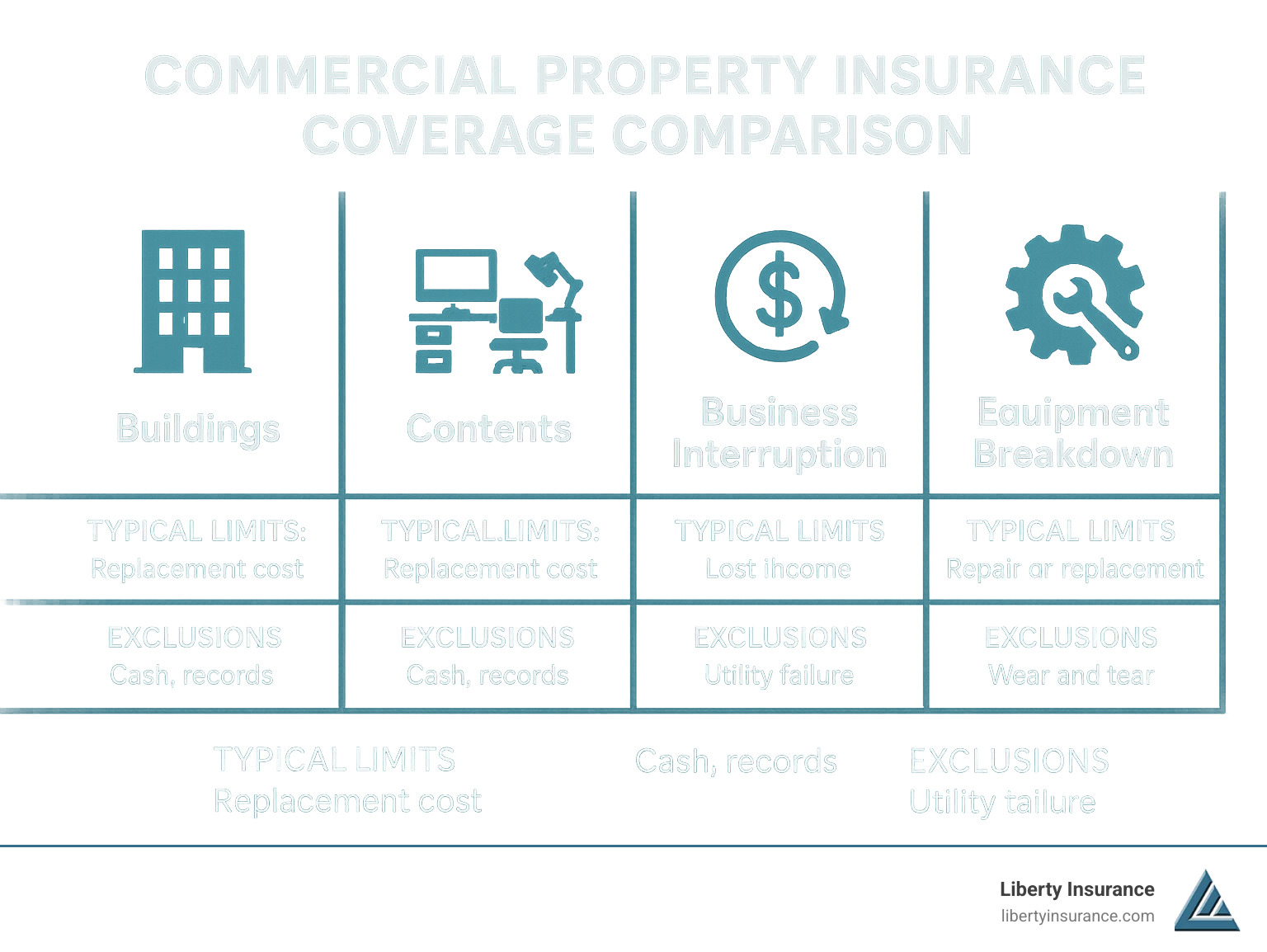
Another key type is Property Insurance. Whether you own or lease your business space, if disaster strikes, you’ll want to cover your assets. Businesses like restaurants and boutiques often rely on this to protect their inventory and equipment.
Don’t overlook Professional Liability Insurance if you offer services. This is critical for consultants, accountants, or any profession where advice is given. It protects against claims of negligence or harm due to your professional services.
Why Insurance is Vital for Business Sustainability
Insurance isn’t just a safety net; it’s a business lifeline. Without it, you’re vulnerable to unexpected hits that can cripple your operations.
Pro Tip: “Investing in insurance now can save you from financial disaster later.”
Most small businesses fail due to unforeseen expenses. Insurance helps ensure you stay on your feet, no matter what happens. It provides peace of mind, allowing you to focus on growing your business.
Common Policy Options Available
Understanding policy options is crucial to tailoring coverage to your needs. Here’s a quick comparison of common policies:
| Policy Type | Coverage | Ideal For |
|---|---|---|
| General Liability | Injury, property damage | Retail, Hospitality |
| Property Insurance | Physical assets, natural disasters | Retail, Restaurants |
| Professional Liability | Negligence, errors | Consultants, Freelancers |
Here is the deal: Picking the right policy is like choosing the right tool for a job; it can make or break your business in tough times.
Types of Commercial Insurance for Small Businesses
Did you know that 40% of small businesses never reopen after a disaster? That’s why finding the right commercial insurance is crucial.
In this guide, you’ll discover the ins and outs of different insurance policies that can safeguard your business. Let’s dive into the types of commercial insurance every small business owner should consider.
General Liability vs. Property Insurance
General liability insurance covers legal expenses from accidents, injuries, and claims of negligence. On the other hand, property insurance protects your physical assets like buildings and equipment. Imagine a customer slips and falls in your store—liability insurance has your back. BUT, if a fire damages your office, property insurance steps in.
Here’s the deal: Both are essential, but they cover different risks. Assessing your specific needs helps you decide which is a priority.
Pro Tip: Combine general liability and property insurance in a Business Owner’s Policy (BOP) for comprehensive coverage and savings.
Understanding Worker’s Compensation Insurance
Worker’s compensation insurance is a must if you have employees. It covers medical expenses and a portion of lost wages if an employee gets injured at work. This not only protects your team but also shields you from costly lawsuits.
Here’s how it works: You pay a premium based on your payroll and industry risks. In return, you’re assured that any workplace accidents won’t break your bank.
Comparison of Insurance Providers
Choosing the right provider can be overwhelming. To simplify, here’s a comparison of some top insurance companies and their offerings:
| Provider | General Liability | Property Insurance | Worker’s Compensation |
|---|---|---|---|
| Provider A | Yes | Yes | Optional |
| Provider B | Yes | No | Yes |
| Provider C | Optional | Yes | Yes |
Look carefully at each provider’s offerings and choose the one that aligns best with your business needs.
Cost Factors and Budgeting for Small Business Insurance
Ever wondered why your small business insurance premium is higher than expected? This isn’t about random numbers—it’s about calculated factors that you can control and leverage.
Here is the deal: Understanding the factors that impact insurance costs can save you a significant amount of money. Let’s dive into what these factors are and how you can use them to your advantage.
Factors Influencing Insurance Costs
The cost of small business insurance is influenced by several key factors. The industry you’re in is a massive one. If you’re in a high-risk industry, expect to pay more. Your business location also matters. Operating in areas prone to natural disasters or high crime rates can increase your premiums. The size of your business, including the number of employees and revenue, affects costs too. And let’s not forget your claims history—multiple claims can skyrocket your rates.
Calculating Potential Insurance Costs
Calculating potential insurance costs isn’t rocket science. You can break it down into manageable steps. Here’s a simplified formula using estimated cost ranges:
| Factor | Estimated Cost Range ($) |
|---|---|
| Industry | 1,000 – 5,000 |
| Location | 500 – 2,000 |
| Size of Business | 1,200 – 3,000 |
| Claims History | 0 – 2,500 |
Add up these ranges to get a rough estimate of what you’re looking at. Keep in mind these figures fluctuate based on specific circumstances.
Strategies for Budgeting and Saving on Insurance Premiums
Want to lower your insurance premiums? Start by shopping around. Different insurers offer different rates for the same coverage. Increasing your deductible can lower your premiums significantly, BUT be prepared to pay more out-of-pocket in the event of a claim. Risk management is another strategy—implementing safety measures can lead to discounts.
Pro Tip: Bundle your insurance policies with one provider to score discounts.
It’s all about being proactive and strategic.
Evaluating if a Policy Fits Your Budget
So, how do you know if a policy fits your budget? First, assess your coverage needs. Don’t pay for unnecessary coverage. Secondly, compare the premium against the benefits. Ensure you’re getting value for every dollar spent. Finally, consider the insurer’s reputation. Cheaper isn’t always better if it means poor service.
Evaluating a policy isn’t just about numbers—it’s about aligning with your business goals and financial situation.
Legal and Compliance Considerations
Did you know that nearly 40% of small businesses face legal action every year? That’s why understanding the legal and compliance aspects of small business insurance is crucial. You can’t afford to skip this step.
Legal requirements for insurance vary widely depending on your location and industry. However, there are some universal truths. You MUST ensure that your business aligns with local, state, and federal insurance laws. Failure to do so can lead to hefty fines and even business closure.
Understanding Legal Requirements for Small Business Insurance
Every small business owner needs to know that certain insurances are not optional. Workers’ compensation is mandatory in almost every state if you have employees. If you use vehicles for business, commercial auto insurance is a must. But that’s not all.
General liability insurance might also be required, especially if you operate in sectors with high customer interaction. The real kicker? Even if it’s not legally required, having this coverage can save you from financial disaster.
Compliance Issues Related to Commercial Insurance
Compliance isn’t just a box to tick. It’s about ensuring your coverage truly protects you. You need to keep your policies up-to-date and reflect any changes in business operations. If you expand your services or move to a new location, your insurance policies need to reflect that.
The biggest compliance issue? Underestimating the level of coverage needed. If your coverage is inadequate, you might find insurance providers denying claims. Stay vigilant and regularly review your policies to stay compliant.
Consequences of Not Having Adequate Insurance Coverage
Think skipping on insurance will save you money? Think again. The consequences for lacking adequate coverage can be dire. Lawsuits, fines, and the loss of business licenses are just the start.
If you don’t have the right insurance, you might be personally liable for debts or damages. This can lead to financial ruin and even bankruptcy. Don’t gamble with your business’s future.
Pro Tip: Consult with an insurance expert to ensure your coverage meets all legal requirements and business needs.
Compliance Checklist for Small Business Insurance
Here’s a quick checklist to help you stay on top of insurance compliance:
- Verify state and local insurance requirements.
- Ensure workers’ compensation coverage is in place for all employees.
- Maintain up-to-date commercial auto insurance for business vehicles.
- Regularly review and update general liability insurance coverage.
- Schedule annual insurance policy reviews with a professional.
- Document all insurance policies and proof of compliance.
Choosing the Right Insurance Provider
Did you know that 40% of small businesses face insurance disputes every year? Choosing the right provider can make all the difference. Let’s dive in and make sure you don’t end up as part of that statistic.
When it comes to small business insurance, not all providers are created equal. You need a company that’s not just interested in collecting premiums but also has your back when it counts. Here’s the deal: picking the right insurance provider is like hiring a key team member. They need to be reliable, transparent, and supportive.
Criteria for Selecting a Reliable Insurance Provider
First things first. You want a provider with a strong reputation and a track record of satisfied clients. Check online reviews, testimonials, and ratings from independent organizations like AM Best or J.D. Power. This gives you an idea of their financial stability and customer service quality.
Now, let’s get into specifics:
- Experience in Your Industry: Ensure the provider understands the unique risks and needs of your sector.
- Comprehensive Coverage Options: Look for a provider that offers a variety of policies to cover all aspects of your business risks.
- Claims Service: Investigate their claims process. Quick and hassle-free claim settlements are a must.
Step-by-Step Guide to Evaluating Insurance Provider Credibility
Evaluating credibility isn’t complex if you follow these steps:
- Research Thoroughly: Use online resources to gather data on their reputation and reliability.
- Check Licenses: Verify the provider is licensed to operate in your state. This can save you from legal headaches down the line.
- Ask for References: Don’t hesitate to ask the provider for references from other small businesses.
Pro Tip: “A face-to-face conversation can reveal more than a brochure ever will. Schedule a meeting to discuss your needs.”
Comparing Different Insurance Quotes and Policies
You should never go with the first quote you receive. Here’s a breakdown of how to effectively compare:
| Aspect | What to Look For |
|---|---|
| Coverage Limits | Ensure the limits match your potential risks. |
| Premium Costs | Check for hidden fees and the actual premium amount. |
| Exclusions | Understand what isn’t covered to avoid surprises later. |
Tips for Negotiating Terms with Insurance Providers
Once you’ve narrowed down your options, it’s time to negotiate the best terms. Remember, every term is negotiable:
- Be upfront about your budget constraints and coverage priorities.
- Ask for discounts, especially if you’re bundling different types of insurance.
- Don’t settle for standard terms; customize the policy to fit your business needs.
Real-Life Case Studies and Examples
Imagine waking up to find your small business on the brink of financial collapse. It happens more often than you think. In fact, 40% of small businesses never reopen after a disaster. But here’s the deal: the right insurance can be your safety net.
Let’s dive into some real-world examples where small businesses not only survived but thrived thanks to smart insurance decisions. You’ll see how these businesses mitigated risks and even turned potential disasters into success stories.
How Insurance Saved A Bakery From Closing
Meet Sarah, the owner of a quaint bakery in a bustling neighborhood. One day, a fire broke out in the kitchen, causing significant damage. Without insurance, this could have spelled the end for her business. However, her comprehensive property insurance covered the damages and helped her get back on her feet in no time.
“Insurance turned a potential financial disaster into a temporary inconvenience,” Sarah shared.
This incident taught Sarah the importance of reviewing and updating her coverage regularly to ensure it matched her business needs as they evolved.
The Cost of Neglect: A Retail Store’s Hard Lesson
John ran a thriving local retail store but decided to cut costs by skimping on insurance. When a heavy storm caused a roof collapse, he faced over $100,000 in damages. Without business interruption insurance, John struggled to recover.
John’s story is a stark reminder that underestimating insurance can lead to severe financial strain. He learned the hard way that it’s not a matter of if something will happen, but when.
Success Through Strategic Insurance Planning
Take the example of a tech startup that invested in cyber liability insurance. When a data breach occurred, their insurance covered the legal fees and the cost of notifying affected clients. This proactive approach not only saved them financially but also protected their reputation.
“Being prepared with the right insurance gave us peace of mind,” the CEO explained.
They credited their survival and continued growth to strategic planning and the foresight to prioritize insurance tailored to their specific risks.
Lessons Learned: The Importance of Reviewing Insurance Policies
Many small businesses underestimate their insurance needs until it’s too late. Regularly reviewing and updating your policy can prevent this oversight. For instance, a growing restaurant chain discovered they were underinsured after expanding. They quickly adjusted their policy to reflect their new size and risk profile.
Pro Tip: Regularly review your insurance policy, especially after significant changes to your business operations or size. It can save you from unexpected financial pitfalls.
Final Thoughts

Securing the right insurance for your small business is more than a box to check—it’s an investment in your company’s future. As you navigate the myriad options available, remember that the right policy can be a lifeline in turbulent times, enabling your business not only to survive but to flourish. Embrace the power of being prepared, and let your business soar to new heights with confidence.
Answers to Common Questions
What are the key types of insurance small businesses need?
Small businesses typically require general liability insurance, property insurance, and worker’s compensation insurance to cover common risks.
Why is insurance vital for small business sustainability?
Insurance is crucial as it protects businesses from financial losses due to unforeseen events, ensuring long-term sustainability.
How can small businesses budget effectively for insurance?
Businesses can budget effectively by comparing quotes, understanding their specific coverage needs, and exploring premium-saving strategies.
What factors influence the cost of small business insurance?
Factors include the type of business, location, number of employees, and the specific risks associated with the business operations.
How can one choose the right insurance provider for a small business?
Evaluate providers based on their reputation, customer service, policy options, and the ability to tailor coverage to your specific needs.